Exercises for bone health
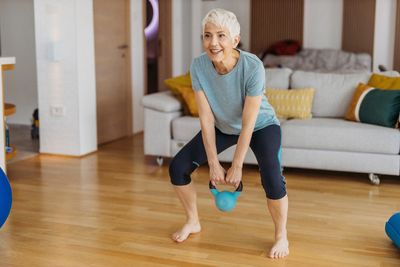
What exercises are recommended for bone health?
"Bones stay strong if you give them work to do." This comes from a great guide on exercises for people with osteopenia and osteoporosis and those who want to prevent these conditions from The Royal Osteoporosis Society in the UK.
The best way to keep bones strong is to do both weight-bearing impact and muscle-strengthening exercises. Short bursts of activity are ideal for bones and mixing up the exercises you do helps to vary the input to your muscles and bones which is also helpful.
Weight Bearing Exercise
Weight-bearing exercises for osteoporosis include both low-impact activities like walking, using an elliptical, or stair-stepping, and high-impact activities such as jogging, dancing, and hiking. If you are not currently doing any weight bearing exercises, your should talk with your doctor who will likely recommend starting with low impact activities for shorter amounts of time, and increasing that time as you are able.
What about my pool exercises?
Any movement is good movement, and there is some evidence that water based exercise can have benefits for bones, so this is a good place to start if you have painful joints, frequent falls, trouble with your balance and coordination, or are recovering from surgery. Heated pools can also help improve flexibility by warming up your muscles to avoid injuries. If you feel very comfortable in the pool, incorporating land based exercises would give you a bigger bang for your exercise buck.
Strength Training
The term "strength training" can be so intimidating to those of us who have never lifted weights. But if we want to ace our next DEXA bone density scan and prevent falls, then we want strong legs, hips and glutes. Walking alone does not build muscle in these areas. Strength training helps with longevity, insulin resistance and blood sugar control, blood pressure, joint pain, and so much more. For these reasons, the CDC recommends that adults get at least 150 minutes of moderate-intensity aerobic activity per week, or 75 minutes of vigorous-intensity activity, plus muscle-strengthening activities twice a week.
Especially if you are older, have had muscle or joint injuries or arthritis, experience frequent falls or balance issues, or are simply new to physical activity, I recommend working with clients of varying ages (and including those 60+) and body types. See below for in-person class opportunities in Tucson. If you know your body well and have background experience with fitness, the following online and book options would be a great place to start:
- Yes2Next: Online videos for strength training that use just your body and things around the home (like chair, table, or stairs) and includes options for modifications for different physical abilities
- MelioGuide: Offers a free email course on osteoporosis, online strength training and weight bearing exercise videos of about 25-30 minutes in length, and a great book with strength exercises for bones.
Balance Training
Don't forget about balance! As we get older our neural pathways and cardiovascular responses to position changes can slow down a bit. Look for classes that offer a combination of balance, coordination, and resistance exercises. Activities like Tai Chi, social dancing (dancing with friends--talking while moving adds that coordination component!), and yoga/chair yoga can be helpful. See below for local resources offering these types of classes.
Tucson Specific Recommendations
- Edith Ball Adaptive Pool: Features an indoor, warm water Therapy Pool for individuals with disabilities, arthritis or other conditions, or those who just prefer the warm water. Both the Recreation Pool and the Therapy Pool are fully ADA accessible.
- Optum Community Center: For individuals aged 55+. You do not need to be an Optum member (though they might ask you to become one; feel free to say no). Offers classes in strength training, weight bearing cardiovascular movements, balance, as well as social events like movie afternoons, art workshops, and conversational Spanish groups.
- Tucson Jewish Community Center: Offers many group classes but specifically has programming for older adults including bone strengthening/weight training options. There are group classes (formerly known as the BEST program; they are VERY popular and often sell out) as well as 1:1 or 1:2 personal training/instruction on these exercises. Both of these are open to the public but members do get a discounted price.
- El Rio HealthBuilders Wellness Programs: Includes movement classes at 3 different locations, including strength training, weight bearing exercises, and balance as well as . Memberships are $10/month, or you could try a class for $5.